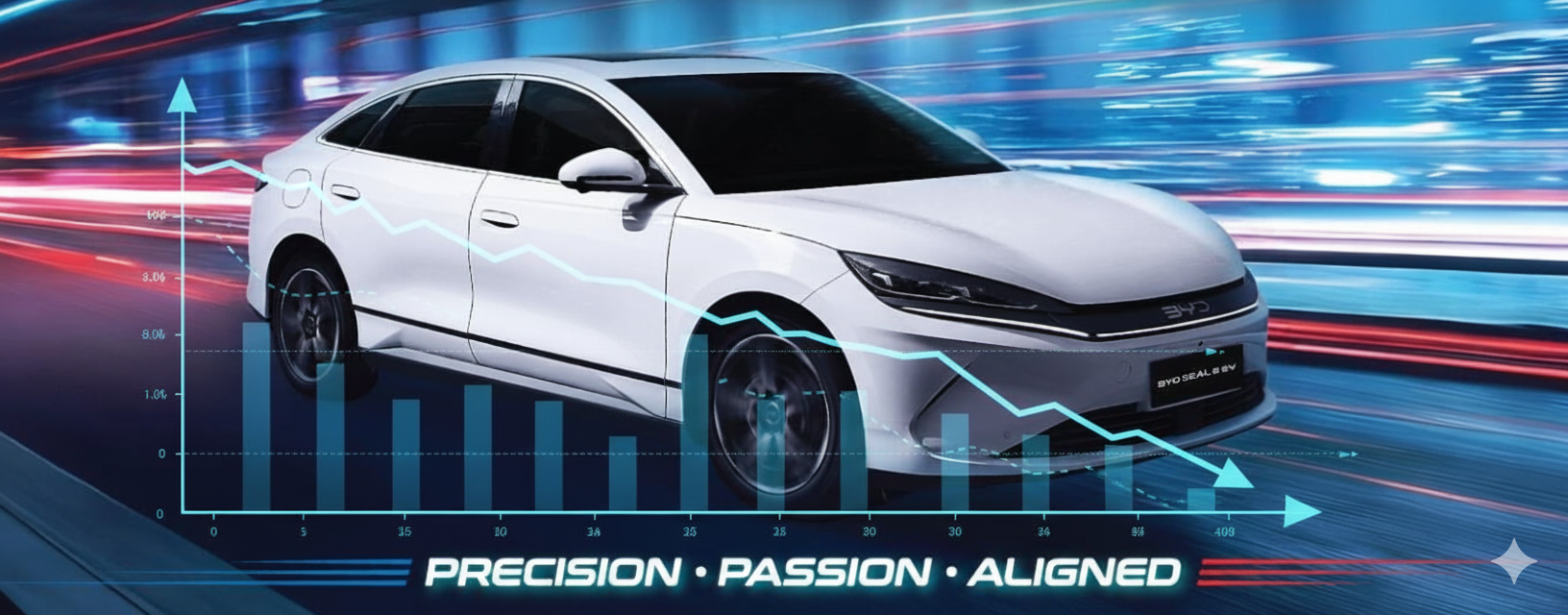
For the first time since 2020, Chinese electric vehicle giant BYD has hit a speed bump. The company that dominates Malaysia’s EV market just posted its first quarterly sales drop in over five years.
BYD Global Sales Growth (2018-2025)
New Energy Vehicles (BEVs + PHEVs) in thousands of units
Note: Q3 2025 shows BYD’s first quarterly sales decline in over 5 years. The company has revised its 2025 target from 5.5M to 4.6M units, focusing on sustainable growth over market share.
BYD sold 1.106 million vehicles globally in the third quarter, down 2.1% from the same period last year. This might not sound like much, but for a company that’s been on a seemingly unstoppable growth trajectory, it’s a big deal.
What Caused BYD’s Global Sales Slump?
The trouble started in September. BYD’s global sales dropped 5.88% compared to September 2023, ending an impressive 18-month winning streak. This was their first monthly decline since February 2024.
But here’s the thing: BYD isn’t struggling because they can’t compete. They’re actually making a smart business choice. Instead of joining China’s brutal price war that’s been destroying profit margins across the industry, BYD decided to step back and focus on healthier growth.
When everyone’s selling products at rock-bottom prices just to grab market share, sometimes the smartest move is to walk away from that fight. That’s exactly what BYD did.
The main problem came from their plug-in hybrid vehicles. Sales of these models fell 25.58% in September alone. This marks the sixth straight month of declining hybrid sales, showing that Chinese buyers are shifting their preferences.
On the bright side, BYD’s pure electric vehicles performed much better. Battery electric vehicle sales jumped 24.31% in September to 205,050 units. However, this growth wasn’t enough to make up for the overall global sales decline.
BYD Adjusts Expectations for 2025
Recognizing the challenging market conditions, BYD has revised its annual sales target. The company now aims to sell 4.6 million vehicles in 2025, down from their original goal of 5.5 million units. That’s a reduction of up to 16%.
BYD executives aren’t spinning this as a failure. Instead, they’re calling it a move toward “healthy” and “sustainable” growth. Rather than chasing market share at any cost, they want to build a business that actually makes money.
International Success Continues, Especially in Malaysia
While BYD faces challenges in their home market affecting global sales figures, their international expansion story looks completely different. The company sold 71,256 vehicles overseas in September, representing a massive 115.85% increase from the previous year.
Malaysia has become one of BYD’s biggest success stories outside China. Since launching the Atto 3 in December 2022, BYD has sold over 20,000 vehicles in Malaysia. They’ve held the top spot as Malaysia’s leading EV brand for three consecutive years running. Power lah!
The company isn’t just selling cars here either. BYD recently expanded their Malaysian lineup with new models like the Seal 6 EV. They’re also building a local assembly plant in Tanjung Malim, Perak, which shows they’re committed to the Malaysian market for the long term.
This local assembly facility could be a game changer for Malaysian buyers. When companies build cars locally instead of importing them, it often leads to better pricing and faster delivery times. Plus, it creates jobs for our people.
The Bigger Picture for China’s EV Industry
BYD’s global sales decline reflects broader challenges facing China’s entire EV industry. The government has been pressuring automakers to end their destructive price wars, which were becoming unsustainable for everyone involved. Sometimes you need to know when to stop the kiasu mentality and focus on building something that lasts.