The conversation about affordable electric vehicles in Malaysia has suddenly become quite real, thanks to Proton and Perodua. For years, owning an EV felt like something only the rich could afford. But now, with Proton’s e.MAS lineup and Perodua’s first homegrown EV coming soon, things are starting to look up lah.
EVs getting real for Malaysians
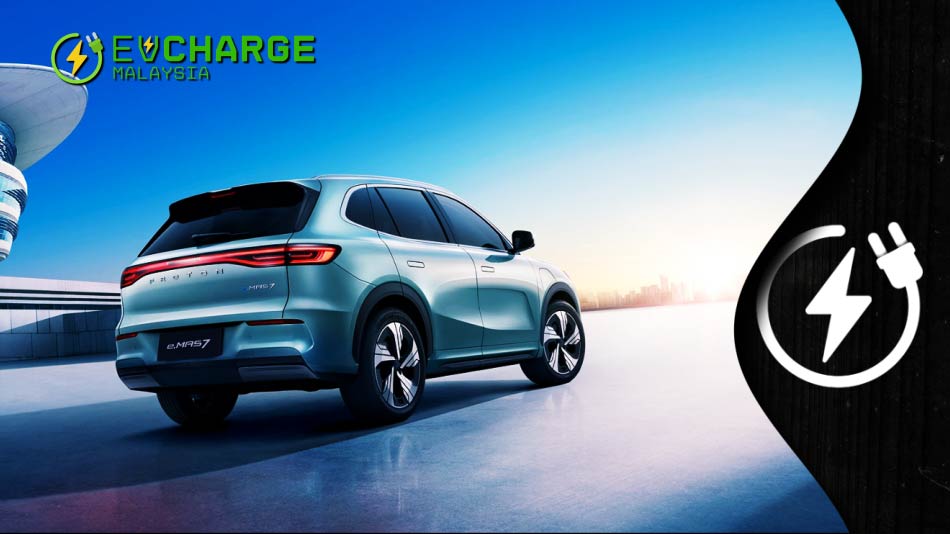
Price has always been the biggest barrier for most of us. Imported EVs like Tesla and BYD are nice to see, but when you check the price tag, it’s like, cannot lah. Proton’s move to launch local assembly for its e.MAS 5 and e.MAS 7 models has made EVs way more approachable. The e.MAS 7, for example, is priced starting around RM109,000, almost 30% cheaper than BYD’s base models. Proton is even teasing the e.MAS 5 at around RM60,000, which could change how Malaysians see EVs.
Meanwhile, Perodua is looking to launch its first fully local EV by the end of 2025. The brand that gave us affordable Myvis and Axias is now trying to build Malaysia’s first homegrown EV, one that could cost as low as RM80,000. That’s within reach for middle-class families if financing is manageable.
Proton and Geely, a strong combo
Proton’s partnership with China’s Geely has been a game-changer. Geely already makes mature EV platforms, so Proton didn’t need to start from zero. The e.MAS models are based on Geely designs but adapted to local conditions, like better water wading depth for Malaysia’s rainy weather. Proton’s new EV assembly plant in Tanjong Malim, Perak, opened with a capacity of 20,000 EVs annually, scalable to 45,000 if demand grows.
Local assembly means lower import costs. That’s why Proton can sell these EVs more affordably compared to imported ones. The plant also brings new jobs and strengthens the local supply chain, which is another step toward making EVs more “made in Malaysia”.
Perodua’s homegrown route
Perodua’s EV story is a bit different. The company didn’t have a ready EV from Daihatsu, so it had to develop one almost from scratch. The government reportedly gave them a tight deadline to deliver by 2025, so it’s been a rush project. Still, Perodua pulled through with a prototype called “Aspirations,” a compact crossover EV with about 400 km real-world range using a lithium iron phosphate (LFP) battery from CATL.
The real selling point is Perodua’s goal to reach 50% local content by mid-2026. That means more Malaysian parts and suppliers in every car, which can lower prices even more in the long run. Imagine, a local EV with local components and local servicing. That’s how affordability becomes sustainable.
The affordability question
So how exactly do Proton and Perodua make EVs more affordable? Here’s what’s happening:
- Local production: Proton’s Tanjong Malim plant and Perodua’s pilot production reduce import taxes and logistics cost.
- Partnerships and tech sharing: Proton gets Geely’s tech expertise, while Perodua focuses on homegrown R&D.
- Government support: Both brands benefit from the government’s push for wider EV adoption, including tax exemptions and duty breaks.
- Volume scaling: As production increases, costs per unit go down. Proton’s capacity is already set to hit 45,000 units when demand stabilizes.
If Proton’s e.MAS 5 really launches below RM70k, EVs will no longer feel exclusive. You can imagine yourself plugging in your EV at home, paying less for maintenance, and skipping petrol forever. That’s real savings over time, maybe not overnight, but steady savings.
What this means for you
You no longer have to stare at Teslas like museum pieces. Having Proton and Perodua enter the EV game means you can actually imagine owning one. With Proton leveraging tech from Geely and Perodua building its own EV ecosystem, choices will expand and competition will keep prices honest.
In a few years, you’ll likely see e.MAS and Perodua EVs everywhere from Shah Alam to Penang. Charging stations will follow, and public acceptance will grow. The real winner here? Malaysian consumers like you.
FAQ
1. Will Proton’s e.MAS 5 really be under RM70,000?
Proton hasn’t confirmed the exact price yet, but reports suggest the e.MAS 5 could start between RM60,000 and RM80,000, making it Malaysia’s cheapest EV so far.
2. When can I buy Perodua’s first EV?
Perodua targets to launch it by the end of 2025, starting with small-scale production of about 500 units a month and ramping up after 2026.
3. How far can these local EVs travel on one charge?
Perodua’s prototype offers around 400 km range, while Proton’s e.MAS 7 averages about 450 km depending on battery size and driving conditions.
4. Will EVs cost less to maintain?
Yes, generally EVs have fewer moving parts than petrol cars, meaning lower maintenance costs. No engine oil, no spark plugs, just battery checks and software updates.
5. Can I charge these EVs at home?
Sure can. Both Proton and Perodua EVs can charge using standard wall chargers. You can also upgrade to faster home units if needed.
6. Are government incentives still available for EV buyers?
Yes, EV buyers still enjoy import and excise duty exemptions until at least 2027, which helps keep prices down.
In short, Proton and Perodua are shaping Malaysia’s electric future in their own ways. Proton by bringing technology and scale, and Perodua by building trust through local innovation. When these two brands compete, rakyat wins. Best part? You might finally park an EV in your driveway without selling your kidney for it. Malaysia boleh.